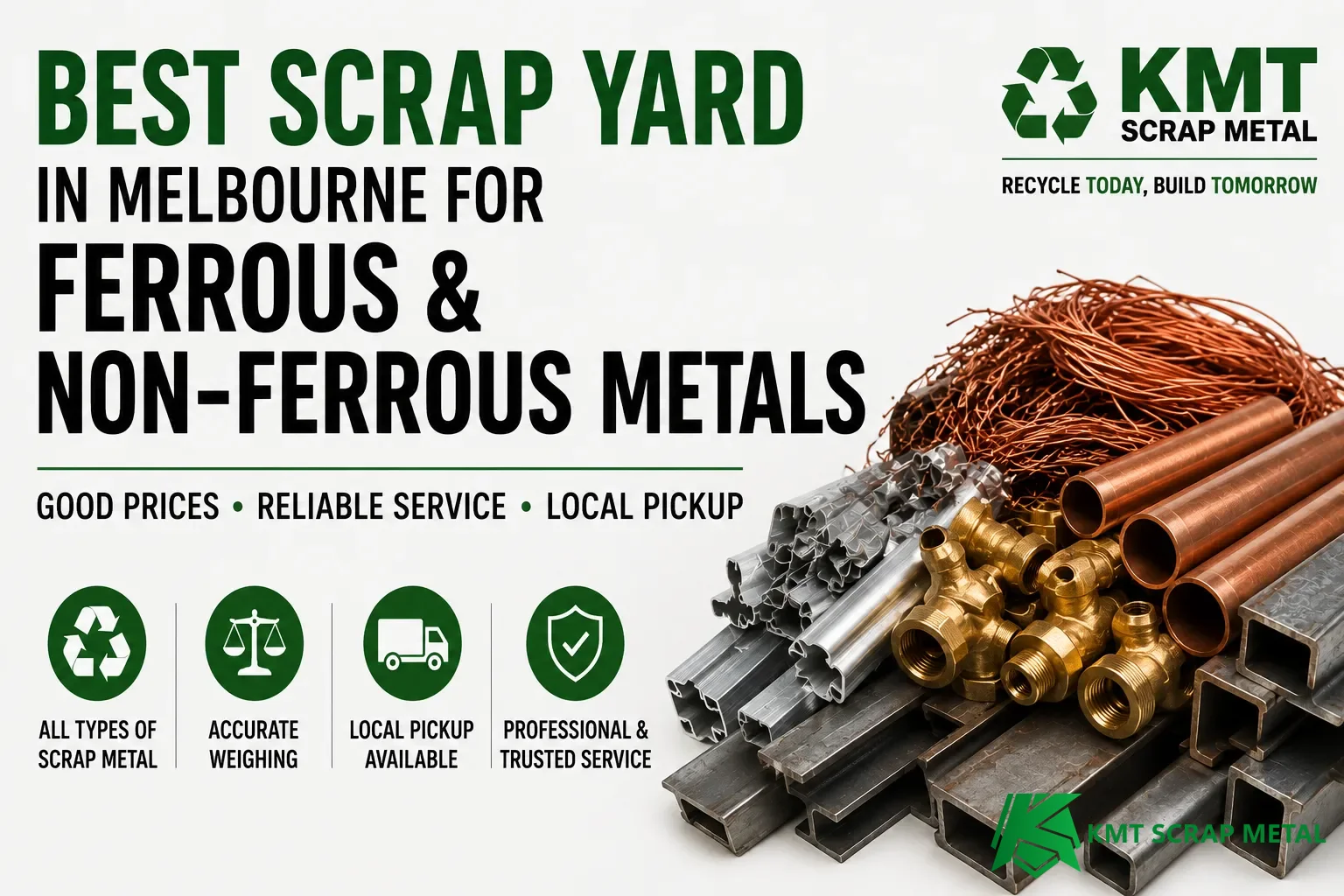
Looking for the best scrap yard in Melbourne for ferrous and non-ferrous metals? Learn where to sell copper, aluminium, brass, steel, stainless steel and other scrap metals with professional weighing, pickup and recycling services.
Looking for the best scrap yard in Melbourne for ferrous and non-ferrous metals? Whether you have copper wire, aluminium scrap, brass fittings, stainless steel, heavy steel, machinery, cables, or commercial metal waste, choosing the right scrap yard can make recycling your unwanted metal easier and more convenient.
Melbourne homes, construction sites, factories, warehouses, plumbers, electricians, and industrial businesses generate recyclable metal every day. However, not all scrap metals are the same. Understanding the difference between ferrous and non-ferrous metals can help you organise your materials before visiting a scrap yard or arranging collection.
In this complete guide, we explain the difference between ferrous and non-ferrous scrap, common metals you can sell, how scrap yards assess recyclable materials, and what to look for when choosing a scrap metal yard in Melbourne.
What Is a Scrap Yard?
A scrap yard is a facility that receives, identifies, weighs, sorts, and handles recyclable metal materials. Scrap can come from residential cleanups, plumbing work, electrical projects, construction, demolition, manufacturing, and industrial operations.
A professional scrap metal yard may accept both ferrous and non-ferrous materials and provide additional services such as local pickup, commercial scrap collection, industrial cleanup, and scrap metal bins.
To explore professional recycling and collection options, review the scrap metal services available in Melbourne.
What Is the Difference Between Ferrous and Non-Ferrous Metals?
One of the first steps in scrap metal recycling is identifying whether your metal is ferrous or non-ferrous.
Ferrous metals contain iron as a major component and are commonly used in construction, machinery, manufacturing, and heavy industrial applications.
Non-ferrous metals generally do not contain iron as their main component. Common examples include copper, aluminium, brass, bronze, and lead.
| Metal Category | Common Examples | Common Sources |
|---|---|---|
| Ferrous Metals | Steel, Cast Iron, Carbon Steel | Construction, Machinery, Factories |
| Non-Ferrous Metals | Copper, Aluminium, Brass | Electrical, Plumbing, Manufacturing |
| Speciality Metals | Nickel, Titanium, Tungsten | Industrial and Engineering Applications |
You can browse the scrap metal materials accepted by KMT Scrap Metal to explore different recyclable metal categories.
Best Scrap Yard in Melbourne for Ferrous Metals
Ferrous scrap is commonly generated in large quantities by construction companies, demolition contractors, factories, engineering workshops, and manufacturing businesses.
Because some ferrous materials can be heavy and bulky, suitable transport or professional collection may be required.
Heavy Melting Steel Scrap
Heavy melting steel, commonly known as HMS, can include thick steel materials generated through demolition, industrial operations, and heavy engineering projects.
Common HMS scrap can include:
- Heavy structural steel
- Demolition steel
- Industrial steel components
- Heavy machinery parts
- Thick steel plates
- Oversized ferrous scrap
KMT Scrap Metal lists heavy melting steel among the ferrous materials in its Melbourne scrap metal catalogue.
Structural Steel Scrap
Structural steel is commonly generated during construction, building renovation, demolition, and industrial projects.
- Steel beams
- Steel columns
- Steel plates
- Structural frames
- Construction offcuts
- Demolition steel
Large structural steel loads may require professional collection because of their weight and size.
Cast Iron Scrap
Cast iron can be found in machinery, engine components, industrial equipment, pipes, and older heavy products.
Common sources of cast iron scrap include:
- Engine blocks
- Industrial machinery
- Heavy equipment components
- Cast iron pipes
- Workshop scrap
Mild and Carbon Steel Scrap
Mild steel and carbon steel are widely used across construction, manufacturing, fabrication, and engineering industries.
Factories and workshops may generate steel offcuts, production scrap, sheets, plates, and other recyclable ferrous materials.
Machinery and Industrial Scrap
Old machinery and industrial equipment can contain significant quantities of ferrous metal. Depending on the equipment, it may also contain copper, aluminium, motors, or other recyclable materials.
Before moving heavy machinery, contact a scrap metal recycler to discuss collection and handling requirements.
Best Scrap Yard in Melbourne for Non-Ferrous Metals
Non-ferrous metals are commonly generated through electrical, plumbing, manufacturing, automotive, construction, and industrial work.
Different non-ferrous metals should be kept separate where practical because copper, brass, aluminium, and other materials may require individual identification and assessment.
Copper Scrap
Copper is widely used in electrical and plumbing applications because of its conductivity and other material properties.
Common copper scrap can include:
- Bright copper wire
- Copper pipes
- Copper tubing
- Electrical copper
- Insulated copper cable
- Mixed copper scrap
If you have copper materials, read our guide to the best place to sell copper scrap in Melbourne.
Aluminium Scrap
Aluminium is lightweight and commonly used in construction, transport, manufacturing, and residential products.
- Aluminium window frames
- Aluminium extrusions
- Aluminium sheets
- Industrial offcuts
- Cast aluminium
- Aluminium profiles
Although aluminium is lightweight, commercial and manufacturing operations can generate large volumes of recyclable aluminium scrap.
Brass Scrap
Brass is commonly generated by plumbers, manufacturers, workshops, and demolition contractors.
Common brass scrap includes:
- Brass taps
- Brass valves
- Plumbing fittings
- Brass rods
- Brass sheets
- Machining scrap
Keep brass separate from copper and steel where practical to simplify material identification.
Stainless Steel Scrap
Stainless steel is commonly used in commercial kitchens, fabrication businesses, factories, industrial equipment, and architectural applications.
- Stainless steel sheets
- Stainless steel pipes
- Kitchen equipment
- Industrial tanks
- Fabrication offcuts
- Machinery components
Other Non-Ferrous and Speciality Metals
A professional scrap yard may also handle additional recyclable materials generated by industrial and engineering businesses.
- Bronze
- Lead
- Nickel
- Titanium
- Tungsten
- Zinc
- Electric motors
- Radiators
- Electrical transformers
Check the KMT Scrap Metal materials catalogue before arranging your scrap recycling requirements.
Which Scrap Metal Is More Valuable: Ferrous or Non-Ferrous?
Non-ferrous metals such as copper, brass, and aluminium are often assessed differently from common ferrous steel scrap. However, the actual value of any scrap load can depend on the metal type, grade, condition, quantity, and current market conditions.
Large quantities of ferrous scrap can also represent significant recyclable material, particularly for factories, construction businesses, and industrial sites.
The best approach is to separate different metals and request a current assessment for your specific materials.
How Does a Scrap Yard Identify Different Metals?
Scrap metal yards may use several methods to identify recyclable materials. The exact process can depend on the metal and the equipment available.
Visual Identification
Experienced metal recycling teams may recognise common materials based on appearance, use, and physical characteristics.
Magnet Testing
A magnet can provide a simple initial indication when separating many common ferrous and non-ferrous metals. Many iron-based metals are magnetic, while common copper, aluminium, and brass materials are generally non-magnetic.
Material Grading
Different grades of copper, stainless steel, aluminium, and industrial alloys may need separate assessment.
Weighing
After identification and grading, recyclable metal is weighed as part of the scrap assessment process.
What to Look for in the Best Scrap Yard in Melbourne
When choosing a scrap metal yard, consider more than simply searching for the nearest location.
Wide Range of Accepted Metals
A scrap yard that handles both ferrous and non-ferrous metals can be more convenient for mixed scrap loads.
Clear Metal Assessment
Different metals and grades should be identified appropriately. Ask how your recyclable materials will be assessed.
Transparent Weighing
Weight is an important part of scrap metal assessment. Look for a business that clearly explains its weighing process.
Local Pickup Services
Heavy steel, machinery, commercial scrap, and industrial materials can be difficult to transport.
KMT Scrap Metal provides local pickup among its scrap metal recycling services in Melbourne.
Commercial Scrap Bins
Factories, workshops, warehouses, and construction businesses generating scrap regularly may benefit from a dedicated collection bin.
Businesses can request a scrap metal bin for suitable ongoing collection requirements.
Best Scrap Yard for Plumbers in Melbourne
Plumbers commonly generate non-ferrous scrap during renovations, repairs, and replacement projects.
Typical plumbing scrap can include:
- Copper pipes
- Copper tubing
- Brass taps
- Brass fittings
- Brass valves
- Stainless steel components
Separating copper and brass can make metal identification and assessment easier.
Best Scrap Yard for Electricians in Melbourne
Electricians and electrical contractors can generate recyclable cable, copper, and electrical materials.
- Bright copper wire
- Insulated copper cable
- PVC cable
- Electrical wiring
- Aluminium cable
- Electric motors
- Transformers
Keep clean copper wire and insulated cable organised separately where practical.
Best Scrap Yard for Builders and Construction Companies
Construction and demolition projects may generate both ferrous and non-ferrous scrap metal.
Common construction scrap includes:
- Structural steel
- Steel beams
- Steel plates
- Aluminium frames
- Copper pipes
- Electrical cable
- Metal fixtures
- Demolition scrap
For large quantities, professional pickup or a scrap collection bin may be more practical than transporting materials independently.
Best Scrap Yard for Factories and Industrial Businesses
Factories, manufacturers, engineering workshops, and industrial businesses may generate recyclable metal continuously.
Industrial scrap can include:
- Manufacturing offcuts
- Steel turnings
- Machining scrap
- Copper cable
- Aluminium profiles
- Old machinery
- Electric motors
- Industrial steel
Explore commercial and industrial scrap metal services or request a scrap collection bin for ongoing recyclable metal.
How to Prepare Ferrous and Non-Ferrous Scrap
- Separate ferrous and non-ferrous metals: Keep steel and iron apart from copper, brass, and aluminium where practical.
- Sort individual non-ferrous metals: Separate copper, brass, aluminium, and stainless steel.
- Group similar materials: Organise pipes, cable, sheets, offcuts, and machinery components.
- Keep general waste separate: Avoid mixing unrelated rubbish with recyclable metal.
- Take clear photos: Photos can help when discussing large or unusual scrap loads.
- Estimate the quantity: Explain whether you have a residential load, bulk quantity, or ongoing commercial scrap.
- Ask about pickup: Heavy and bulky materials may require professional collection.
Scrap Yard Near Me in Melbourne
If you are searching for a scrap yard near me in Melbourne, consider the type of metal you have, the quantity of scrap, and whether you require pickup or commercial collection.
KMT Scrap Metal operates in Melbourne and handles a broad range of ferrous and non-ferrous recyclable metals.
For more local information, read our complete Scrap Metal Near Me in Melbourne guide.
Why Choose KMT Scrap Metal?
KMT Scrap Metal provides scrap metal recycling solutions for residential, commercial, and industrial customers in Melbourne. The business handles both ferrous and non-ferrous recyclable materials and provides collection options for different scrap requirements.
- Ferrous scrap metal recycling
- Non-ferrous scrap metal recycling
- Copper scrap recycling
- Aluminium and brass recycling
- Steel and industrial scrap recycling
- Local scrap metal pickup
- Commercial scrap collection
- Scrap metal bin services
- Industrial recycling solutions
Visit KMT Scrap Metal Melbourne, explore the scrap materials catalogue, or review available scrap metal recycling services.
Common Mistakes When Visiting a Scrap Yard
- Mixing copper and brass with ordinary steel
- Combining all non-ferrous metals into one unsorted load
- Not checking whether the scrap yard accepts your material
- Relying on outdated online prices
- Transporting heavy machinery without proper planning
- Failing to ask about local pickup
- Ignoring commercial scrap bins for ongoing metal waste
Frequently Asked Questions
What is the best scrap yard in Melbourne for ferrous and non-ferrous metals?
Look for a professional scrap yard that accepts a broad range of metals, provides clear material assessment and weighing, and offers suitable collection options. KMT Scrap Metal handles multiple ferrous and non-ferrous metal categories in Melbourne.
What are common ferrous scrap metals?
Common ferrous scrap includes steel, cast iron, carbon steel, structural steel, heavy melting steel, machinery, and construction metal.
What are common non-ferrous scrap metals?
Common non-ferrous metals include copper, aluminium, brass, bronze, lead, nickel, zinc, and other recyclable metal materials.
Is copper ferrous or non-ferrous?
Copper is a non-ferrous metal. It is commonly found in electrical wiring, cable, plumbing pipes, tubing, and industrial components.
Is steel a ferrous metal?
Most common steel scrap is classified as ferrous because iron is a major component.
Should I separate ferrous and non-ferrous metals?
Where practical, separating different metal categories can make identification, grading, and assessment easier.
Can I get scrap metal pickup in Melbourne?
KMT Scrap Metal provides local pickup services for suitable scrap metal collection requirements in Melbourne.
Can businesses request scrap bins?
Businesses with ongoing recyclable metal can submit their collection requirements through the KMT Scrap Metal request bin page.
Choose a Scrap Yard for Ferrous and Non-Ferrous Metals in Melbourne
Finding the best scrap yard in Melbourne for ferrous and non-ferrous metals starts with choosing a recycling service that accepts your material type, understands different metal categories, and provides suitable weighing and collection options.
Whether you have steel from a construction project, copper cable from electrical work, brass plumbing fittings, aluminium offcuts, or ongoing industrial scrap, organising your materials before recycling can make the process easier.
Visit the KMT Scrap Metal contact page to discuss your ferrous and non-ferrous scrap metal requirements in Melbourne.
Explore scrap metals we buy, review Melbourne scrap metal recycling services, request a scrap metal bin, or browse more scrap metal guides.